Ship & Tell at GitHub Universe: How a Shared AI Config Became Slack's Internal Tool Platform 🐙
My first time speaking at GitHub Universe: how a personal Claude Code setup I shared in a public channel grew into the DevXP AI catalog, the front door to AI tooling for everyone at Slack.

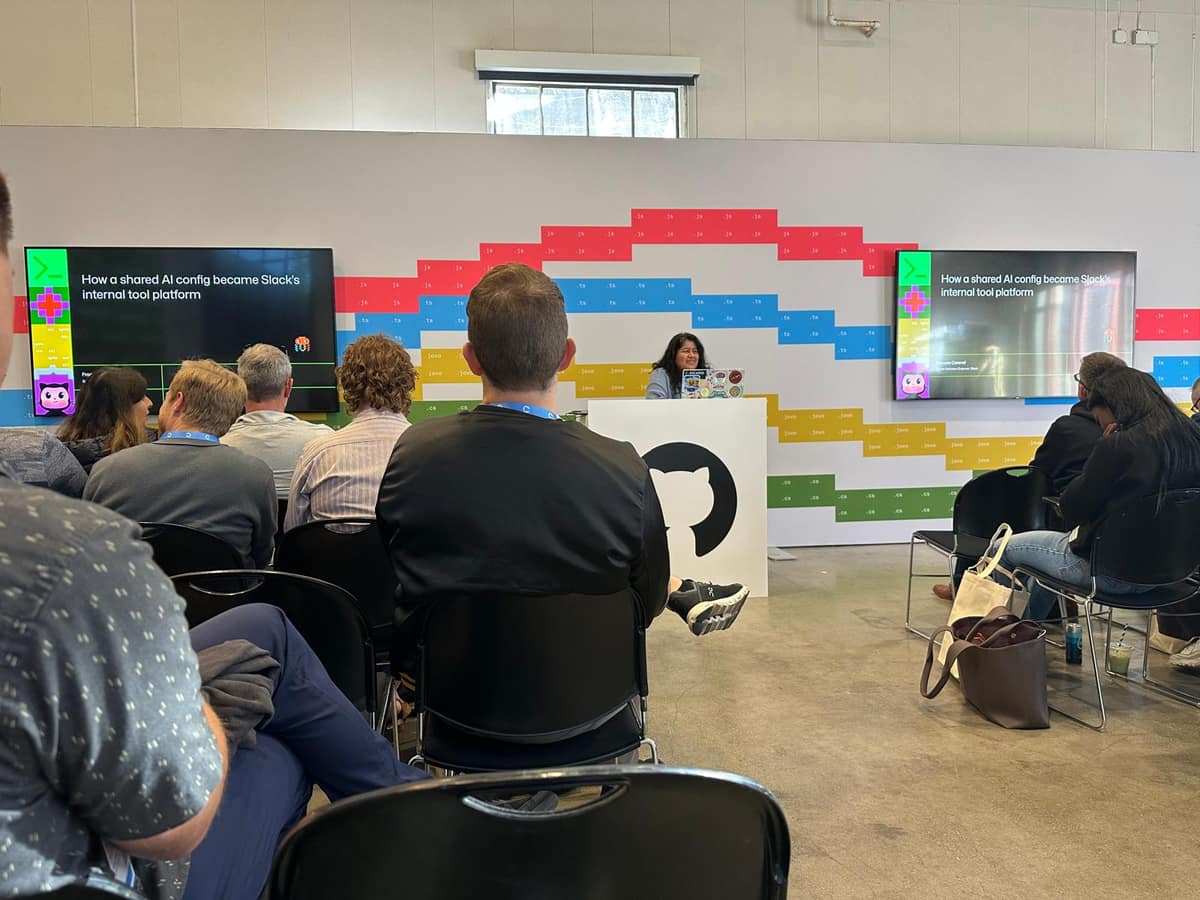
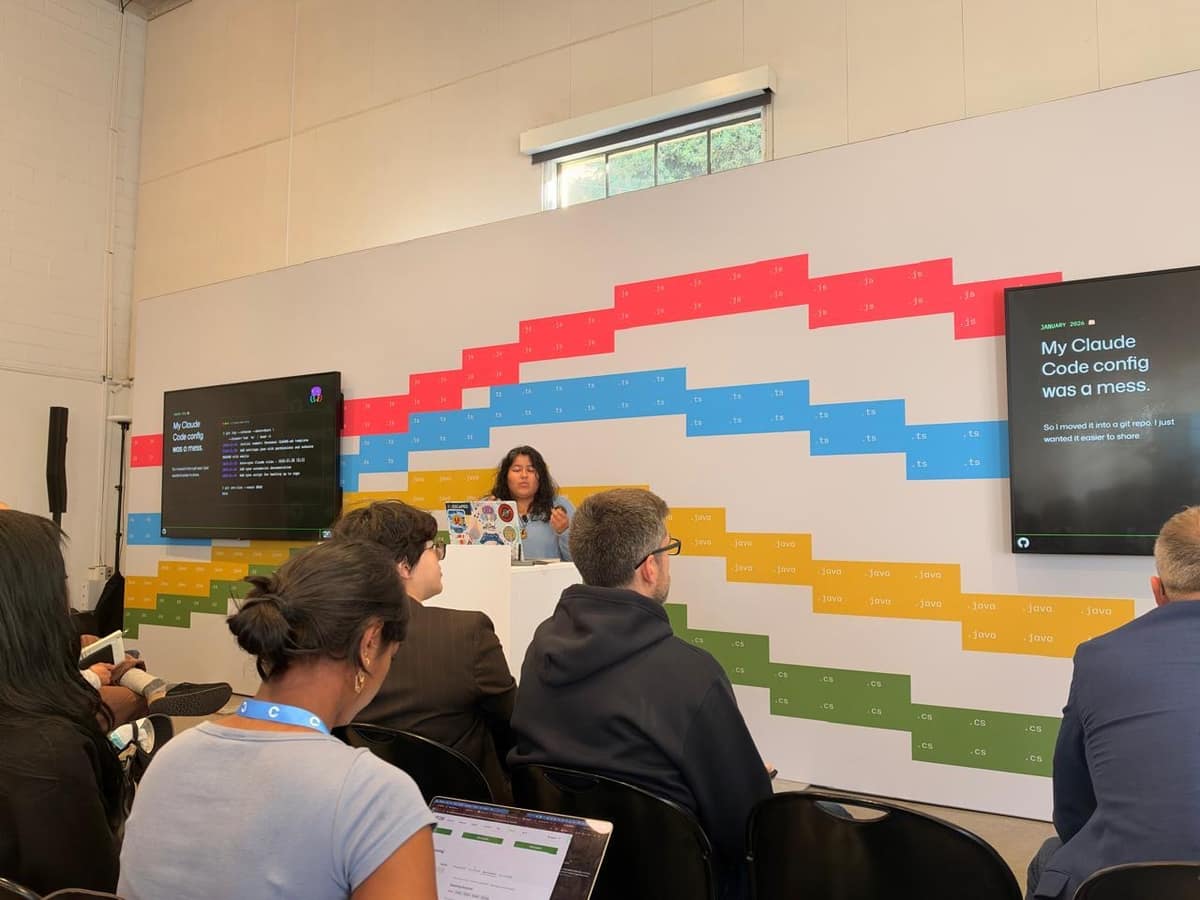
On October 28, I gave my first talk at GitHub Universe: a 15 minute Ship & Tell session at the Firehouse Pavilion at Fort Mason in San Francisco called "How a shared AI config became Slack's internal tool platform." 🎤
It's a story I love telling, because it didn't start as a platform. It started as me trying to work faster.
It started with my own setup 🍳
Back in January, I was really starting to cook with Claude Code. I'd built myself a bespoke setup to move faster, so I shared it in a GitHub repo and posted it in a public channel at Slack.
 🔍 zoom
The response surprised me. Coworkers started forking it, referencing it, and asking questions. And the same three questions kept coming up:
- What tools exist?
- How do I get access?
- Who can I reach out to if I need help?
Those three questions became the whole product.
From a repo to the DevXP AI catalog 📚
I built the DevXP AI catalog to answer those questions for the roughly 1,150 people in Product, Design and Engineering at Slack. It became one source of truth for MCP servers, skills, plugins and agents, backed by an adoption dashboard that tracks real usage across teams instead of relying on surveys.
Over time, this personal project turned into the front door to AI enablement, metrics and tooling for everyone at Slack.
Nine months later 📈
Here's where things stood by the time I got on stage:
- 85 to 310 agentic tools (plugins, skills, apps and agents)
- 18 to 60 MCP servers, built by 33 teams
- 4 million MCP tool calls tracked in the last four months
- 113 distinct contributors to plugins
My favorite part: our agents can read from the catalog too, through its own MCP server. That includes Slackbot and Speck, our internal coding agent. Speck answers questions in a public code channel, so the knowledge keeps growing in the open instead of disappearing into DMs. 🎉
Want to try this at your company? ✅
These are the five lessons I closed the talk with:
- Don't strive for perfection before sharing. My config was messy when I posted it. Sharing early is what got it traction.
- Consolidate, consolidate, consolidate. People don't need more tools. They need one place to find the right one.
- Treat internal tooling like a product. It has users, onboarding, metrics and a roadmap, whether you admit it or not.
- Build and learn in public. Not in a DM, not in a private channel. Public channels are how knowledge compounds.
- Add moments of delight. 🎢 People adopt the tools that are fun to use.
Grateful 💛
 🔍 zoom
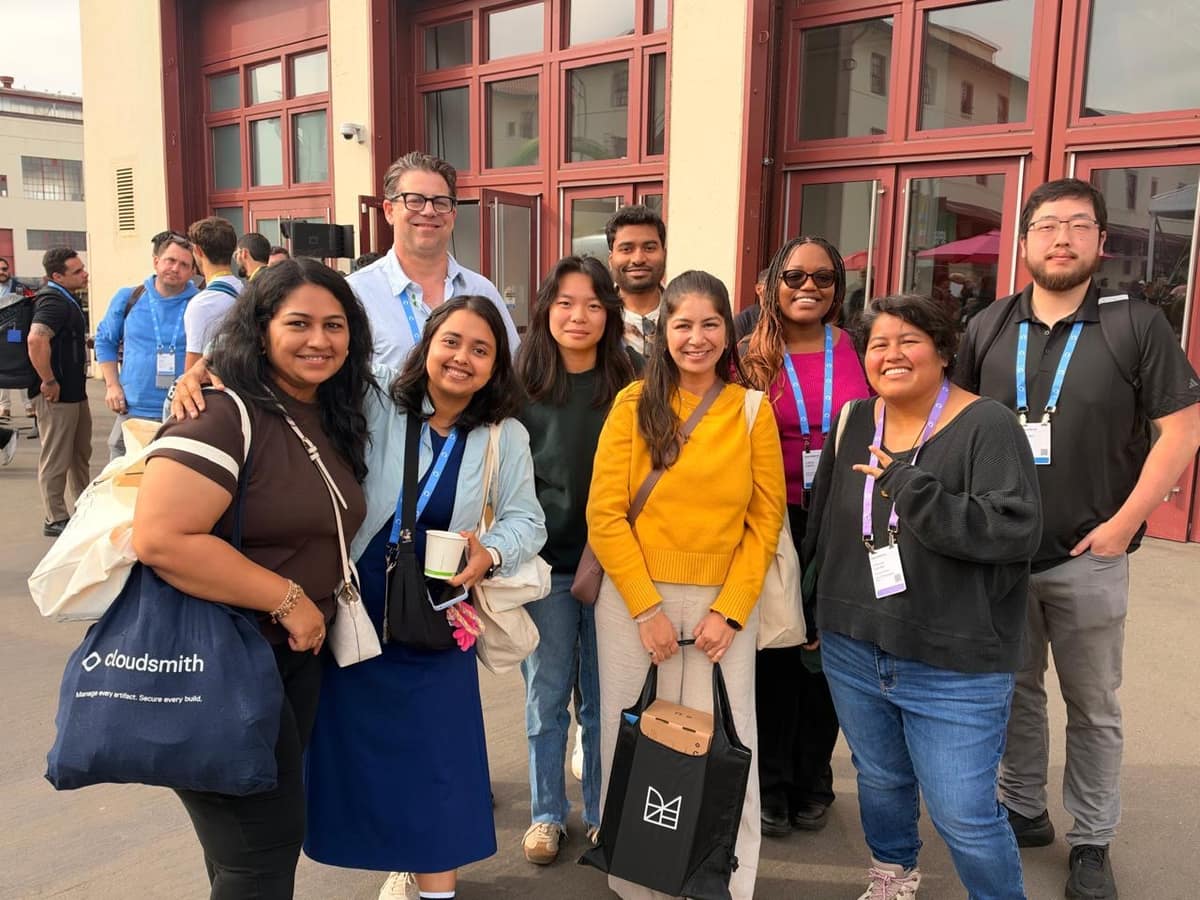
Thank you to the Slack engineers who showed up to cheer me on, and to Rachel Cohen for all her support as a first-time Universe speaker. I've given 100+ talks over the years, but sharing a story about something I built on GitHub, on GitHub's own stage, hit different.
A few other highlights from the week:
- Meeting the DevXP CI infra team. Some of the team made it to Universe, and it was so cool to finally get to know them in person. 🤝🏽
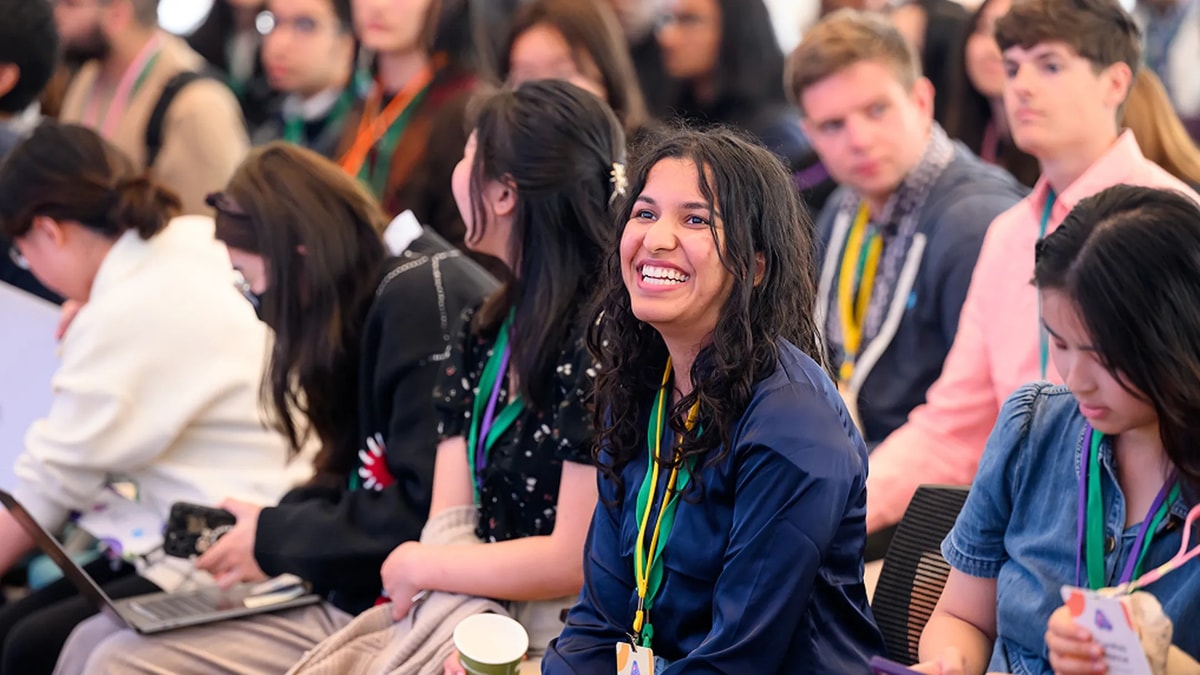
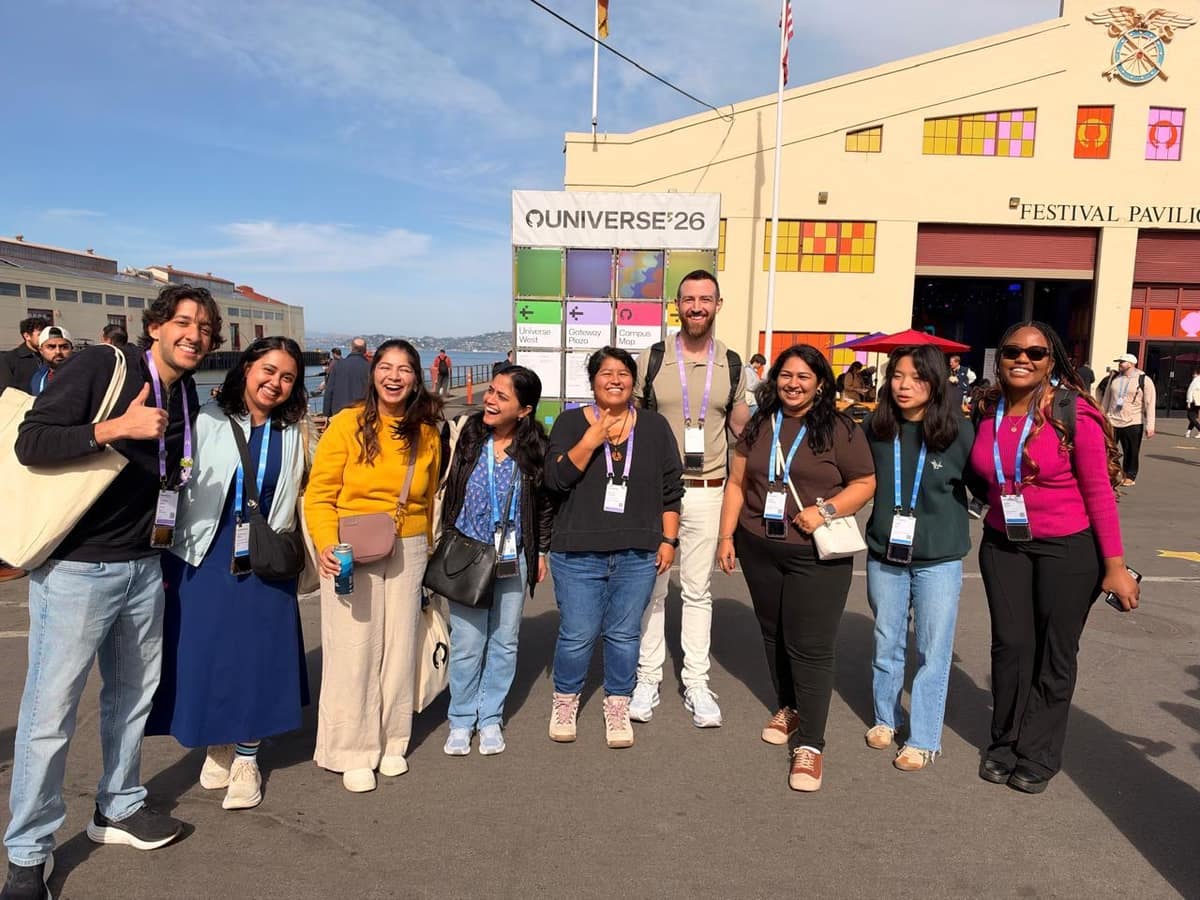
- A Slack crew of almost 10 women. After Grace Hopper was cancelled, its budget got reallocated so a group of nearly 10 women from Slack could attend Universe instead. Redirecting that budget instead of cutting it made a real difference. 💜
- A celebrity sighting. I got to meet and chat with Cameron Hamilton from season one of Love Is Blind, who was already an AI and data scientist back when the show aired. Not every day you talk shop with someone you watched on Netflix! 📺
 🔍 zoom
The best part of the whole journey is that none of it was planned. A shared config became a catalog, the catalog became a platform, and the platform became a talk. All because I posted something in a public channel and kept listening to what people asked for.
Watch the talk 🎥
If you're building internal AI tooling at your company, I'd love to compare notes. 🐙
 GitHub
 Slack